Written by
on
You may have noticed that you’re getting less physical mail these days. There are many factors at play, including cell phone carriers and credit card companies that offer discounts for going paperless, and retail stores that send discounts via email and website pop-ups.
While getting less mail may mean fewer paper cuts, it can also mean your higher ed direct mail pieces are more likely to be noticed.
On average, USPS marketing mail costs have increased by over 7% since 2020. Now is the time to clean your mailing lists and target your prospective students—but it’s not the time to move all your print budget into another bucket.
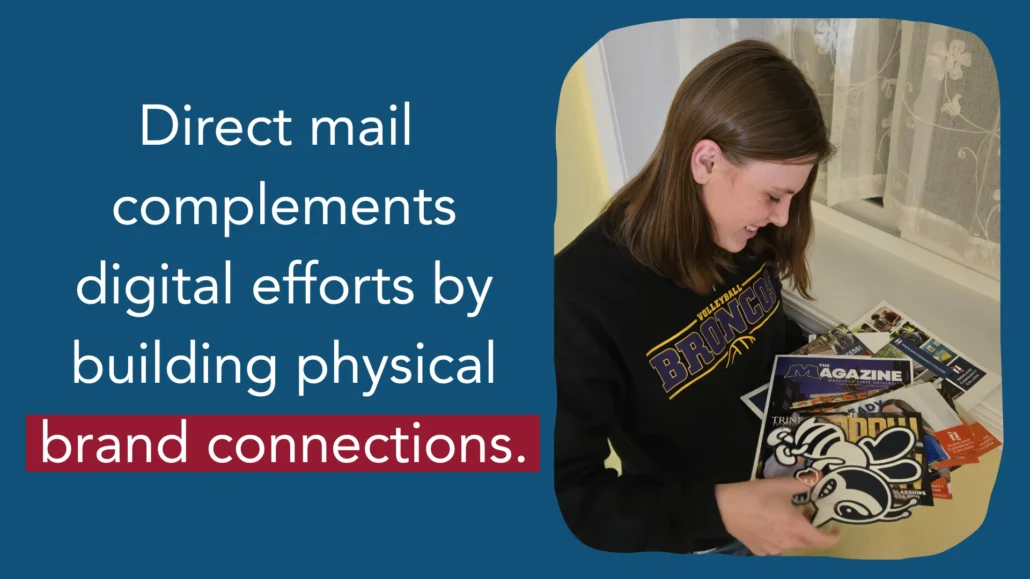
For colleges and universities, viewbooks, brochures, and postcards play a low-tech yet essential role in recruitment. Direct mail can complement digital efforts by building physical brand connections when prospective students may be more receptive.
Gone are the days of the average newsletter or viewbook. Today’s print products can play in the digital world while also staying true to your brand. Here are three ways to make your print marketing content stand out from the crowd.
1. Make It Interactive.
As a top offline marketing tool, direct mail remains an effective ROI tactic when used correctly. Having grown up immersed in technology, Gen Z (people born approximately 1995-2012) is surprisingly responsive to direct mail—even more so when print and digital channels are combined. This media mix creates a marketing experience instead of just a message.
You could use a QR code in a direct mail piece to link to online registration, or a personalized uniform resource locator (PURL), which is a custom website with content tailored to the reader based on their search behavior or interests. These tactics are smart and innovative and can increase visit registration rates (by making the process easier) and conversion rates by providing content we know the individual is interested in.
2. Make It Tangible.
As amazing as our digital world is, it can be easy to get distracted by instant messages, notifications, and pop-ups. That same level of distraction doesn’t apply to print—or at least not to the same degree.
Young adults’ attention span for marketing messages is short; however, when asked about email, 42% of Gen Z say it’s a preferred tool for professional communication. Like email, printed material is more likely to be viewed at a slower pace. For marketers, that “ability to linger and savor” translates into more durable engagement.
3. Make It Personal.
By using tactics like personalized direct mail or variable data printing, you can enrich the content you share with engaging words and images that matter to your target audience.
One version may include a prospective student’s name in the postcard title, along with a description of their degree interests. Another option is a personalized letter addressed to the recipient by first name, along with a viewbook. The content of these print pieces can even be tailored to the student’s expressed interests, such as clubs, sports, and academic programs.
Savvy printing companies can run multiple versions of a single piece, customized with personalized data, at lower price points than you might expect. For colleges and universities, customization can increase your brand’s memorability and help build rapport with prospective students.
With an innovative direct mail strategy and strategic mail nurture campaigns, you’ll put the next steps directly into the hands of your prospective student.
Stamats Can Guide Your Marketing
Stamats understands building engagement. With expertise in print design and management—as well as storytelling, AI discoverability, and enrollment marketing—we can help you build your brand and your audience.