Written by
on
For a decade or more, digital accessibility in higher education and healthcare has existed in a vague space. While the ethical reasons for inclusive web design were clear, the legal requirements could feel like a moving target. That era of ambiguity is over.
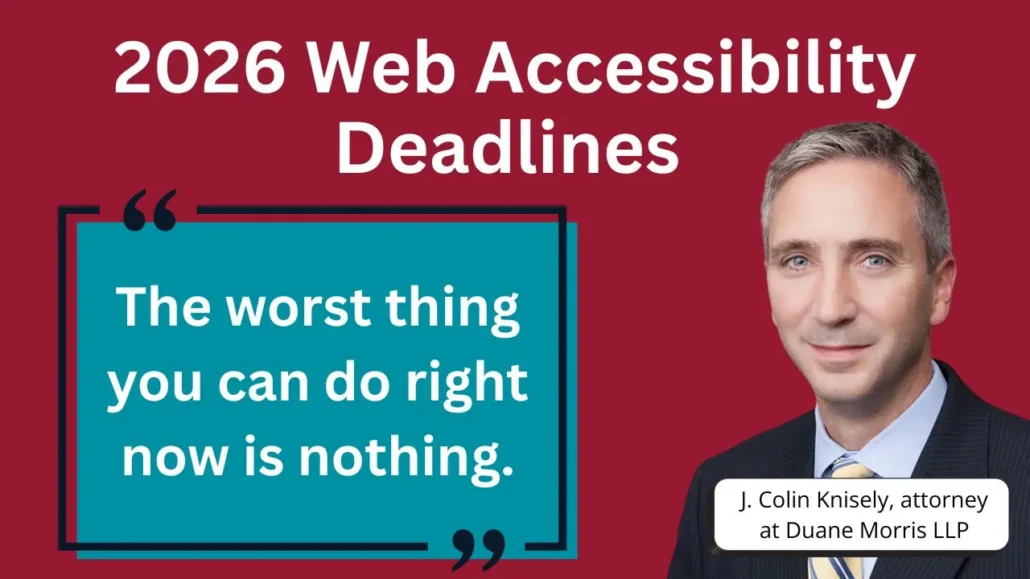
According to attorney and web accessibility legal expert J. Colin Knisely, partner at Duane Morris LLP, most organizations facing legal trouble over accessibility didn’t ignore the problem. Instead, they “underestimated how they would be judged.”
With new federal rules finalized in 2024, the government has replaced abstract best practices with concrete technical standards and firm compliance dates.
The 2026 Compliance Clock is Ticking
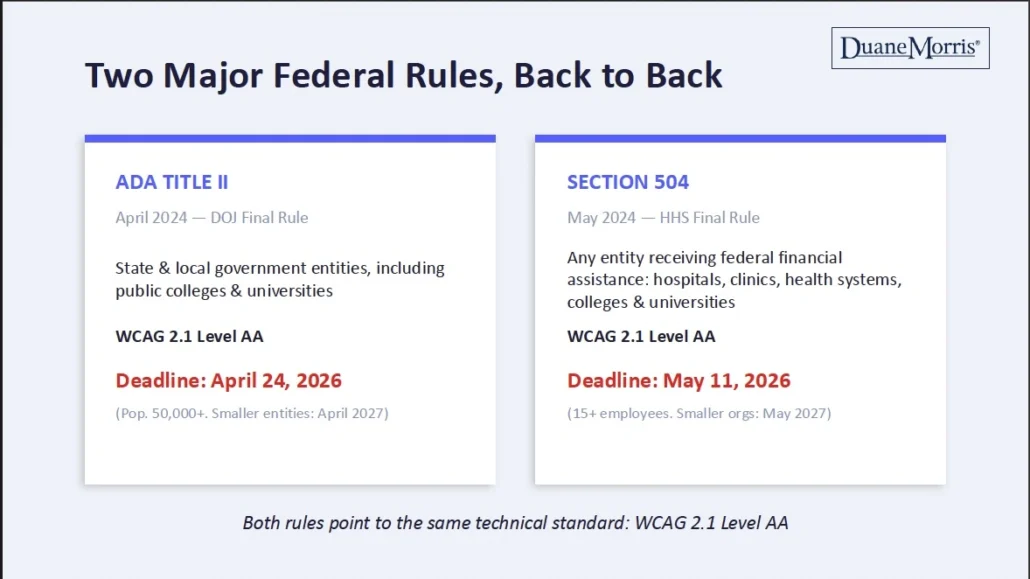
The regulatory landscape shifted with the two major federal rules mandating Web Content Accessibility Guidelines (WCAG) 2.1 Level AA compliance. These are now enforceable standards with looming deadlines:
- Americans with Disabilities Act (ADA) Title II (deadline: April 26, 2027, extended from April 24, 2026): Applies to public colleges, universities, and other state or local government entities with a population of 50,000 or more persons.
- Updated Department of Health and Human Services (HHS) Section 504 Rule (deadline: May 11, 2026): Impacts organizations with 15 or more employees receiving federal financial assistance, including hospitals, health systems, and private universities accepting federal aid.
The rules require organizations to make sure all public-facing web content and mobile apps meet standards to ensure everyone can access these tools. This includes websites, patient portals, online forms, and third-party integrations, even if they’re designed or hosted by vendors.
For healthcare and higher education leaders, the urgency is acute. As Knisely explained in a recent Stamats webinar on the legal risk of web accessibility enforcement, “The deadline is not aspirational. It’s a hard compliance date.”
Related: Read “WCAG 2.2: How Accessible Healthcare Websites Center Patient Experience (& Drive Revenue, Too)”
The Stakes are High for Healthcare and Higher Ed
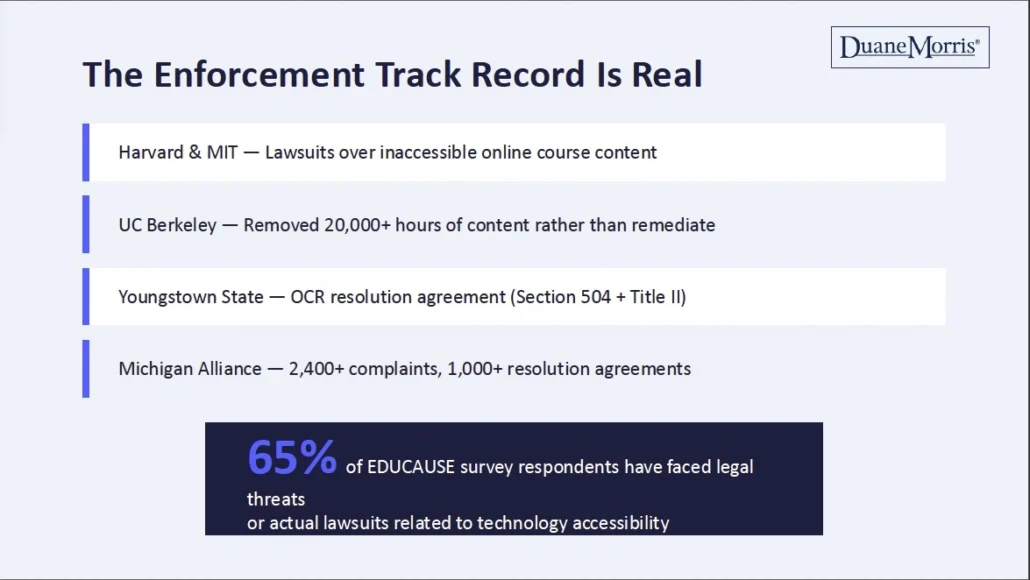
While federal enforcement is a major driver, the most immediate threat to most organizations is private litigation.
The volume of these cases skyrocketed and nearly tripled between 2017 and 2020.
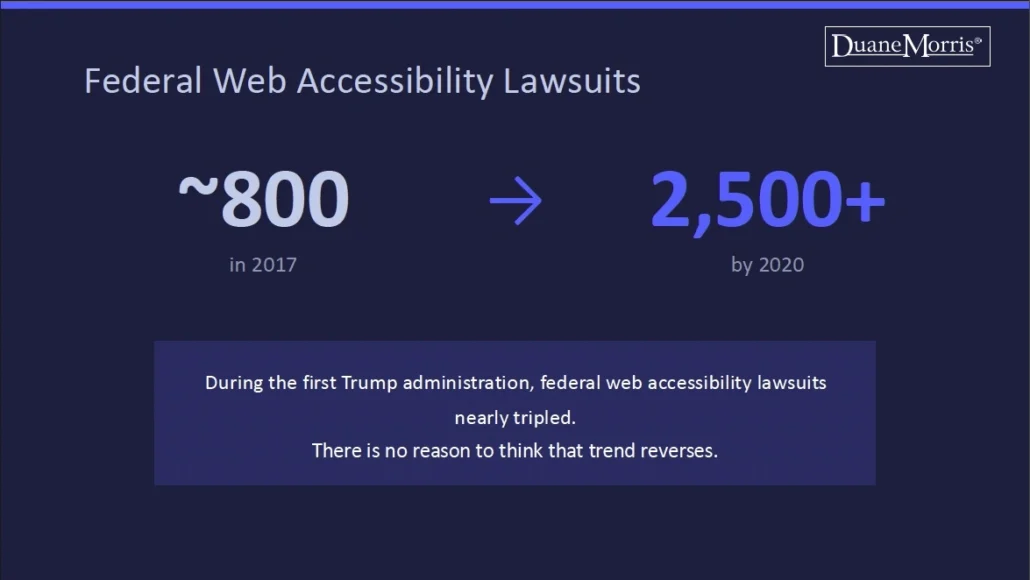
“For every lawsuit that you see filed, there’s probably 10 or more demand letters where a lawsuit is never filed; it’s just threatened,” said Knisely.
Healthcare and higher education are prime targets because their digital interfaces provide essential services. In healthcare, the website is often the primary gatekeeper for:
- Scheduling appointments
- Refilling prescriptions
- Accessing secure patient portals and test results
When these tools are inaccessible, the harm is both immediate and personal. Regulators view these not as optional interactions, but as essential health services.
Similarly, higher education institutions manage massive, fragmented ecosystems where a single inaccessible link can block a student from critical admissions or learning resources.
Related: Read “The ROI of Web Accessibility: A Business Case for Intentional, Inclusive Healthcare Websites”
Governance: What Regulators Are Looking For
A common misconception is that regulators expect immediate, 100% technical perfection. In reality, judges and the U.S. Office of Civil Rights (OCR) evaluate organizational governance. They look for a “meaningful, ongoing effort” rather than a flawless site.
Many IT leaders struggle to focus on accessibility concerns while managing enormous facilities, cybersecurity, and Electronic Health Record (EHR) systems. Knisely cautions that from a legal perspective “later can look like a decision not to prioritize the issue.”
When regulators review an organization, they look for red flags that indicate a lack of oversight:
- Disorganized feedback: Accessibility complaints routed to general, unmonitored inboxes
- Lack of centralized tracking: No centralized record of identified barriers or remediation status
- Unused audits: Reports from years ago that were never followed up with documented action
Knisely advises that documented practices can become an organization’s best defense in these situations, because these efforts toward governance can prove a good-faith effort to address the issue systematically.
Common Mistakes & The Overlay Trap
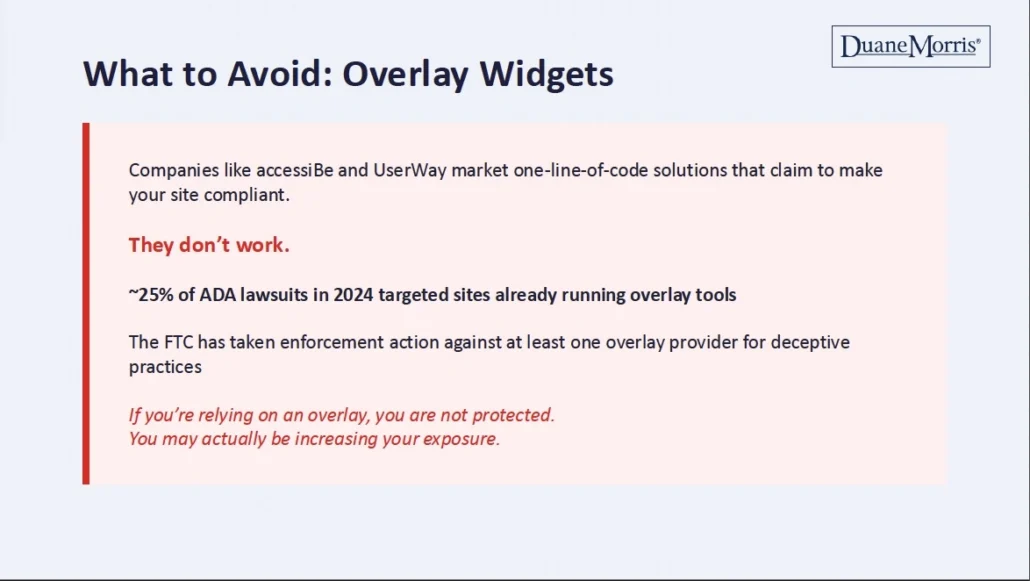
Many organizations attempt to fast-track compliance with accessibility overlays or widgets that promise to fix code automatically. These are increasingly viewed as a legal liability. In 2024, about 25% of all ADA lawsuits targeted websites that were already using overlay tools. That’s because instead of fixing underlying code issues, these tools are more like “putting lipstick on a pig,” Knisely said.
Other common pitfalls include:
- Treating accessibility as a one-time project
- Fragmented ownership across departments
- Relying on automated scans that only catch 25-30% of actual barriers
Related: Read “The Truth About Web Accessibility Tools and Why Human Involvement Is Critical”
4 Actions to Take Right Now
Knisely suggests four immediate steps for healthcare and higher education leaders:
- Assign ownership: Designate a specific individual or committee with genuine authority across the digital ecosystem
- Conduct a human-led audit: Automated tools can’t tell you if a blind patient can complete an intake workflow; meaningful auditing requires manual testing with assistive technology
- Establish a public statement: Provide a clear path for users to report barriers and ensure those reports are triaged and documented
- Document the remediation plan: Maintain a living record of every audit, prioritization decision, and fix performed.
“You may not be fully compliant by May 11,” Knisely said, “But if you can show you identified the problems, you made a plan, and you started executing, that’s a defensible position. Good faith is provable. Neglect is obvious.”

Know where you stand before the 2026 deadline. Our team conducts human-led accessibility audits that identify real barriers, prioritize fixes, and help you build a defensible compliance plan.
Are You Ready for the 2026 Accessibility Deadlines?
Build a defensible compliance plan before enforcement begins.