
Written by
on
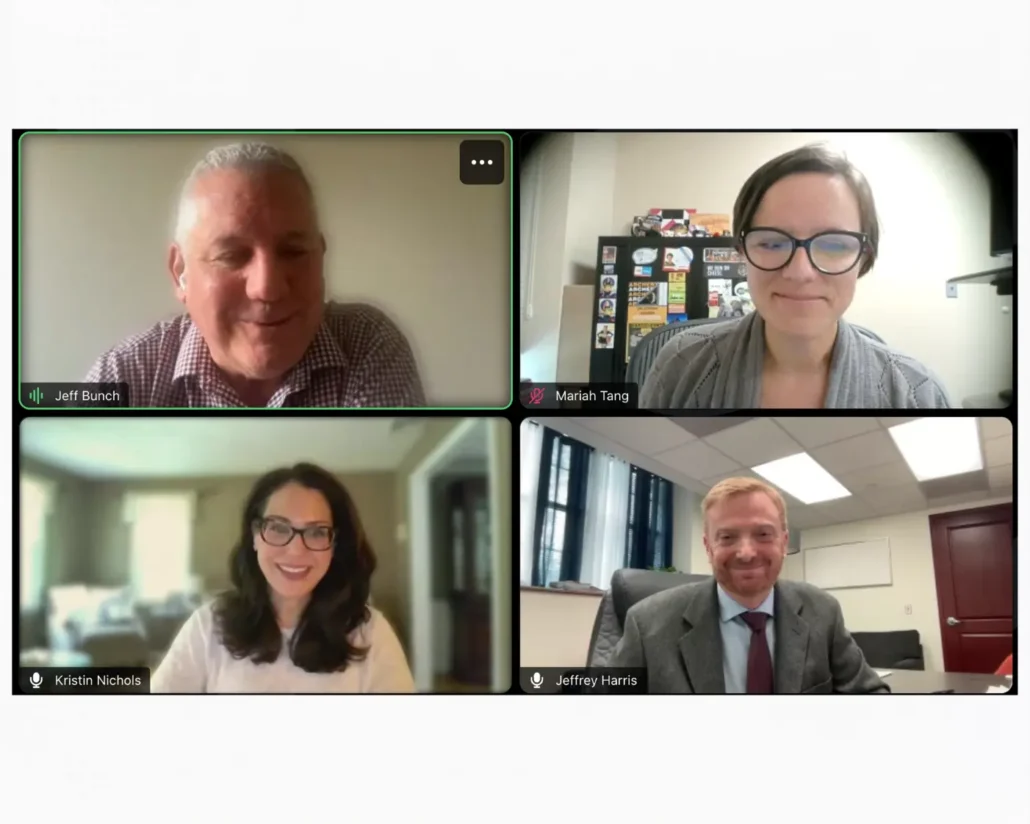
In June, I had the distinct pleasure of hosting three dynamic higher ed marketing leaders on a Stamats webinar:
- Kristin Nichols, Chief Marketing Officer, Massachusetts College of Liberal Arts
- Jeffrey Harris, Chief Marketing Officer, Sam Houston State University
- Jeff Bunch, District Director of Communications, Spokane Colleges
Our topic was a hot one: How AI is transforming the way prospective students find, evaluate, and engage with colleges and universities. Our panelists shared examples from their lived experiences and insights into how fellow marketers can learn from their misses and successes.
Here are three practical strategies they recommended to improve your institution’s discoverability while creating authentic digital experiences that connect with today’s students.
1. Mystery Shop Your Institution’s Digital Presence
As AI-powered search becomes more common, marketers must keep tabs on what prospective students are seeing about the brand. Where is the information coming from? Is it accurate? Is it still relevant?
Mystery shopping, said Jeff Bunch, is a great way to find content gaps, inaccuracies, and even successes to celebrate. It’s not uncommon to find legacy content that is outdated or built around past best practices, which can be confusing or come off as insincere.
“We’re seeing very quickly that, for prospective student audiences, there’s a lot of fear and mistrust in general because they’re growing up in an age of misinformation,” Bunch said. “Students are very tuned into ‘that sounds insincere,’ and they could dismiss what they see.”
Rather than chasing every algorithmic trend, Jeff encourages marketers to focus on the fundamentals: strong content, authentic storytelling, and a digital presence built on trust. Mystery shopping your website is an effective tactic to determine what is and isn’t working and where to prioritize your team’s efforts. Get tips for mystery shopping your digital presence.
2. Weed the Garden: Eliminate Content that Doesn’t Serve Users
How many pages are on your college’s or university’s website? According to Kristin Nichols, that’s the wrong question.
While quality has long mattered more than quantity, AI-driven search makes it more important for institutions to focus less on page count and more on creating rich, authoritative content that serves prospective students and LLM chatbots. The easiest place to start this web content governance process, she said, is to do a website audit.
“What are your top pages? What are the pages no one is visiting?” Kristin asked. “Take a look at underperforming pages and kill them if you can. Look at the PDFs on the site. Are they going to be scrapable? It’s not glamorous work, but that’s the weeding of the garden that needs to take place.”
“It’s not the page count on your website, it’s the richness of the content on your pages.”
— Kristin Nichols, Chief Marketing Officer, Massachusetts College of Liberal Arts
3. Create for Humans. Explain for AI Chatbots.
While AI can improve discoverability, it’s still your institution’s story, student success, and authentic brand that create meaningful connections. According to Jeffrey Harris, AI isn’t the strategy—it’s another tool to help tell your stories in a way that makes sense for prospective students and AI chatbots.
“You’ve got to be in the AI tool to use it and understand it,” Jeffrey explained. “But at the end of the day, it’s about believing in who you are, what you’re about, and the special place you occupy within your competitive set and continuing to reiterate that in all of the language you put out there.”
Jeffrey noted that he has long emphasized student and faculty success stories, which resonate with human audiences.
“The machines don’t really know what to make of that, and that’s when they hallucinate. We’re about furthering people and helping them reach their dreams. Now we’ve got to put a layer underneath that says, ‘This is what this means in our instance.’”
So, organizations must add layers of context to support human-focused content to make it discoverable by AI chatbots. Layering can include structural changes in how content is built on the site, as well as additional contextual cues such as schema markup. Listen to an interview with SchemaApp CEO, Martha van Berkel.
Master AI Visibility One Step at a Time
My biggest takeaway from this expert panel is that the more things change, the more some things stay the same. The core of a successful content strategy has remained true: Create human-centric content that serves your intended audience as seamlessly as possible, while inviting new users organically to the fold. Now, some of those new users happen to be digital agents sent to scour the web for the best answers to serve a human’s query.
Embrace the new pathways LLMs provide to connect with your audience. Get the best long-term return on your efforts by following SEO/AEO best practices, making agile decisions when content isn’t working, and staying true to your brand differentiators. Use these strategies to master AI search visibility a step at a time, rather than allowing yourself to get overwhelmed with the speed of change.
Do You Want to Talk More?
Have an SEO/AEO or Enrollment question on your mind? Schedule a call with a Stamats higher ed strategist today.