Written by
on
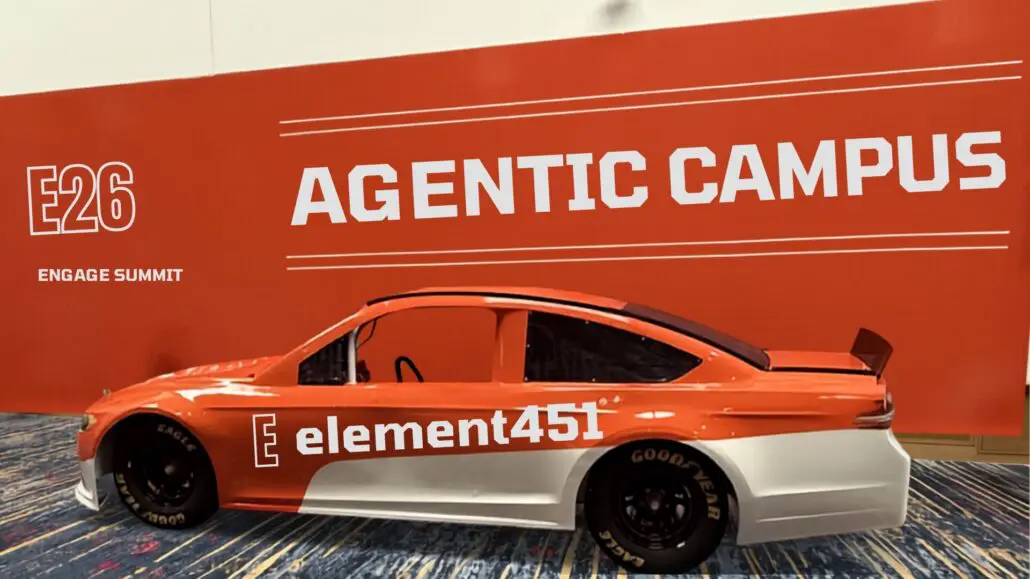
More than 1,000 higher education leaders gathered in Charlotte this June for the Engage Summit 2026 to discuss artificial intelligence, student engagement, enrollment, and the future of higher education.
AI was certainly the headline, but after two days of keynotes, customer presentations, and conversations with enrollment leaders from across the country, one theme continued to surface: The institutions making the greatest progress aren’t just chasing technology. They’re intentionally creating better student experiences.
Whether that means simplifying the enrollment journey, communicating more effectively, or helping staff spend more time on meaningful interactions, the goal is to make it easier for students to succeed.
Here are four ideas from the Engage Summit that colleges and universities can begin applying today.
1. Design the Student Experience, Not Just the Enrollment Funnel
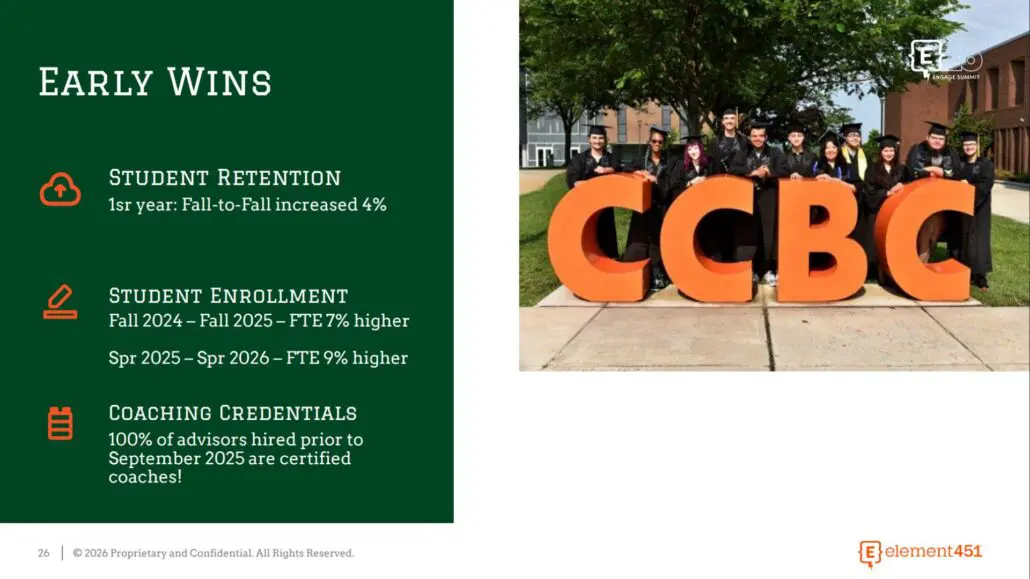
One of the most compelling customer presentations came from the Community College of Baltimore County (CCBC), which shared how it redesigned the student journey from inquiry through completion.
Rather than treating recruitment, admissions, advising, and retention as separate initiatives, CCBC redesigned the experience as one connected journey from first inquiry through completion.
That work wasn’t abstract. It resulted in a detailed, shared journey map that defined both the student experience and the institutional actions required at each stage.
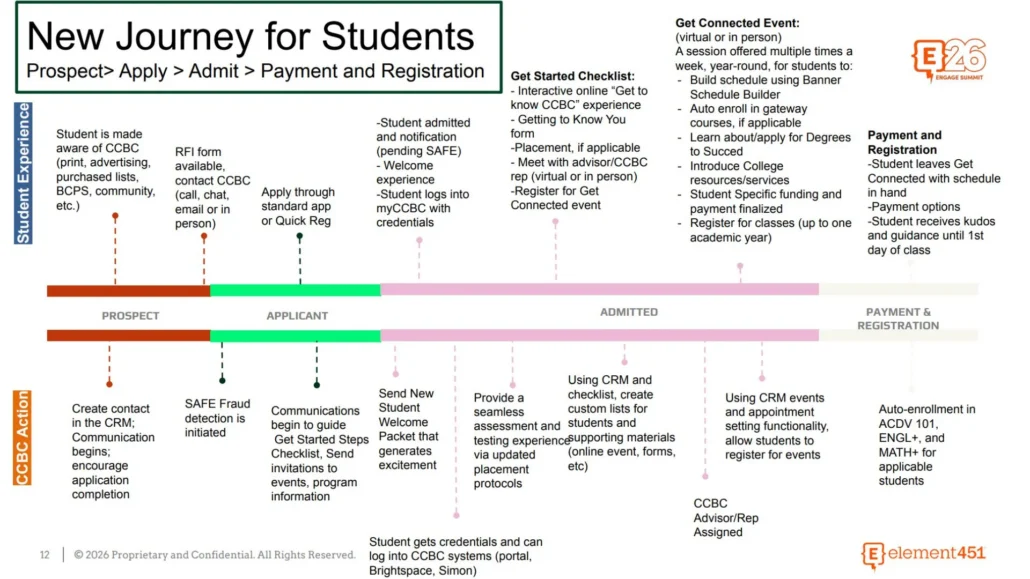
The map outlined every phase of the student lifecycle and paired each step with specific actions. For example:
- When a student submits an inquiry, a CRM-triggered communication sequence begins immediately to guide application completion.
- After admission, students receive a structured onboarding experience, including checklists, events, and proactive outreach.
- As students move toward enrollment, “Get Connected” events help them build schedules, access resources, and complete key steps in one place.
Each touchpoint was intentionally designed to reduce friction, clarify next steps, and build confidence so students always knew what to do next.
It’s a simple idea, but execution is what makes it powerful. Ultimately, students experience your processes, not your org chart.
What you can do now
Sometimes improving the student experience has less to do with adding new technology than removing unnecessary complexity. Take an honest walk through your enrollment process.
- Where are students waiting days for responses?
- How many forms does a prospective student complete?
- Which communications genuinely move them forward, and which simply add more email to their inbox?
2. Use AI Where It Creates Capacity, Not Distance
Artificial intelligence was a recurring topic throughout the conference, but one session stood out because of its practical application.
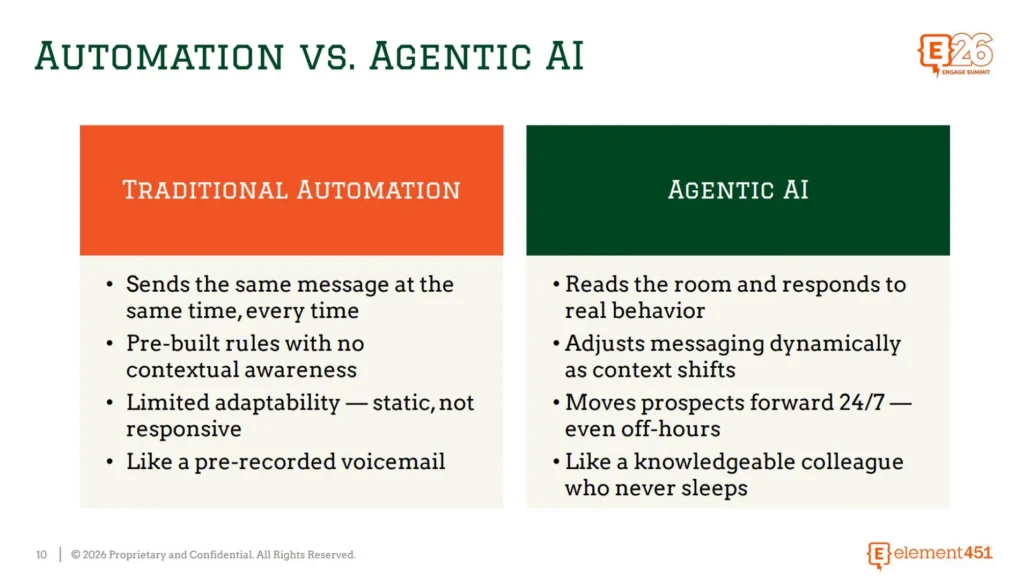
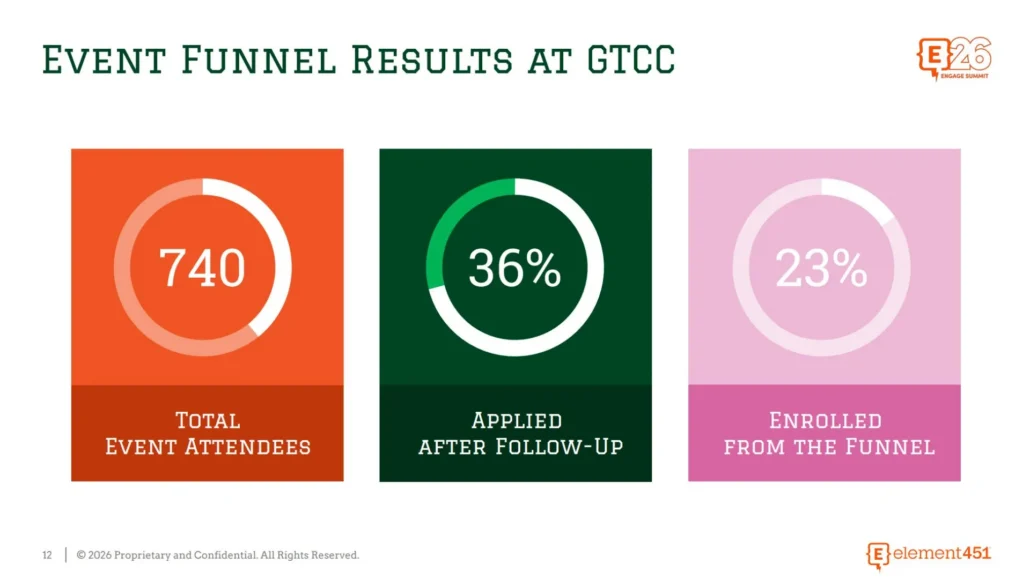
Guilford Technical Community College shared how its team is using agentic AI to improve student engagement by handling routine communication, identifying students who may need additional support, and helping staff prioritize outreach. The result is more meaningful conversations with students.
When repetitive tasks are automated, advisors and enrollment teams have more time for the moments where empathy and human connection matter most.
What you can do now
Routine interactions are often the best place to begin experimenting with AI while allowing your staff to focus on higher-value conversations. Identify one repetitive communication workflow your team manages every day that could be handled by an AI tool:
- Document requests.
- Application reminders.
- Frequently asked questions.
- Appointment confirmations.
3. Discoverability Is Changing Faster Than Most Institutions Realize
Brian Piper’s session on discoverability challenged marketers to think differently about how prospective students find information. For years, higher education marketing has centered on optimizing content for traditional search engines.
Today’s students increasingly ask questions through AI-powered search experiences that summarize answers instead of presenting pages of search results. That shift changes how institutions need to think about content.
Instead of writing primarily for search engines, institutions should create content that clearly answers student questions, demonstrates expertise, and helps prospective students make informed decisions.
Related: Listen to “No More Random Acts of Content With Brian Piper”
What you can do now
Clear, helpful content benefits prospective students today and positions institutions well for the future of AI-powered discovery. Review a handful of your highest-traffic enrollment pages. Ask yourself:
- Does it clearly explain what makes our institution different?
- Does this page answer the questions prospective students are actually asking?
- Would someone unfamiliar with our institution immediately understand who we serve?
4. Leadership Still Shapes the Student Experience
The conference concluded with leadership expert Dane Jensen discussing The Power of Pressure. His message resonated because it extended well beyond higher education. Pressure isn’t something leaders eliminate. Rather, it’s something they learn to navigate with intention.
That perspective felt particularly relevant given the conversations happening throughout the conference:
- Staffing shortages.
- Demographic shifts.
- Enrollment pressures.
- Rapid advances in AI.
None of these challenges are likely to disappear. However, the institutions that respond thoughtfully rather than reactively will be better positioned to serve students over the long term.
What you can do now
Before launching your next initiative, ask one simple question: Will this make life easier for students? That question has a way of clarifying priorities.
Bringing It All Together
The sessions at Engage Summit covered a wide range of topics, but several themes consistently emerged. Across multiple sessions, institutions highlighted how redesigning the student journey can reduce friction from first inquiry through completion. Others shared practical ways AI is creating capacity, helping teams strengthen student engagement while making more time for meaningful conversations.
Marketers were challenged to rethink discoverability as student search behavior evolves, especially in AI-driven environments. And throughout the conference, a consistent message surfaced: technology alone won’t determine success. Leadership still plays a defining role.
Individually, each session offered valuable ideas. Together, they pointed toward a clear direction for higher education.
As a strategic partner of Element451, Stamats helps colleges and universities bring these ideas together. We work alongside institutions to align enrollment marketing, student journey mapping, website strategy, CRM optimization, communications, and AI readiness into a cohesive strategy that improves the student experience from first inquiry through enrollment.
Stamats is a Strategic Partner of Element451
If your institution is exploring Element451 or looking to get more value from your investment, contact us today to discuss building connected, student-centered enrollment strategies.