
Written by
on

AI-generated content is everywhere. Deep fakes are improving fast. Screenshots, videos, and entire accounts can be fake. It’s getting harder for people to know what, or who, to trust.
That is why building your social media brand matters more than ever.
For colleges and universities, social media isn’t just a channel to promote events anymore. It’s where a trustworthy brand is built (or lost) in real time.
What Is a Social Media Brand?
It’s not just about logos or color palettes. Your social media brand is your reputation. It’s the accounts people check when they want to confirm something they’ve heard. It’s the pattern people recognize over time.
Here’s a simple way to think about it: A brand is what people say about you when you’re not in the room.
On social media, that happens constantly in:
- Comments
- DMs
- Group chats
- Screenshots sent between friends
- Reddit threads you’ll never see
Your social media brand is the sum of those impressions, not any single post, not your logo, bio or best-performing Reel. It’s your brand story—what your institution stands for—shared in real-time across your social channels.
What A Social Media Brand Is Not
Before going further, it’s important to be clear about what a social media brand is not. A social media brand is not posting a lot, going viral once, chasing trends, or copying what another school is doing.
Those things might get attention. But they don’t build trust by themselves.
If someone sees five of your posts over two weeks and still can’t tell what your institution stands for, you don’t have a brand. You have activity.
Trust Is a Scarce Resource
When content was harder to create, volume mattered. Now, anyone can generate a post in seconds. But trust has become a scarce resource.
People long for authenticity. Your audience is asking for signals that they can trust you:
- Is this real?
- Is this consistent?
- Does this source feel reliable?
- Are there actual humans behind this?
Higher ed has an advantage here. Colleges and universities represent authority and expertise. But that only benefits your social presence if your content feels human, consistent, and responsive.
If it feels automated or the channel has no activity, that advantage disappears fast.
Social Media Is a Two-Way Conversation
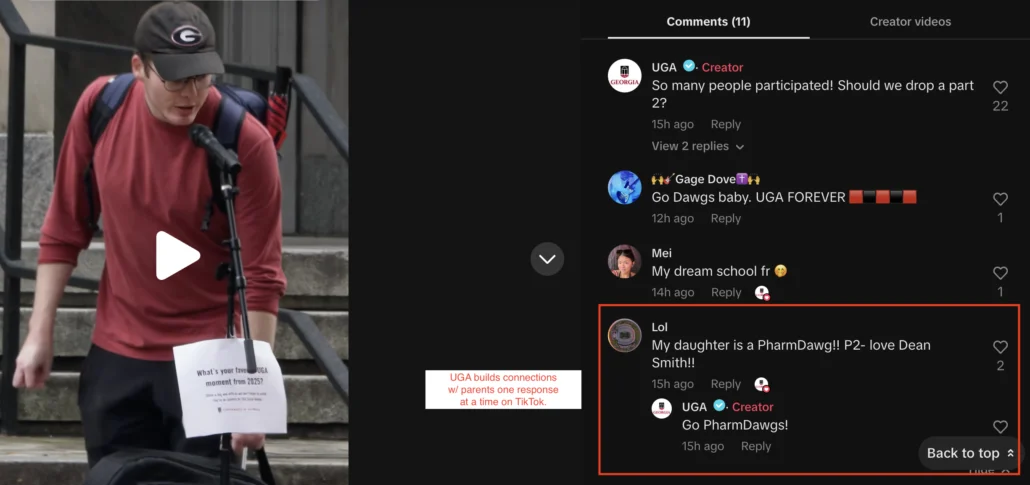
This part matters more than most teams realize. When someone comments on your post, tags your account, or sends a message, they’re giving you something valuable. Their time, attention, and effort.
Ignoring that, frankly, is disrespectful.
No one expects a school to reply to thousands of comments. And most schools are not dealing with that kind of volume. But if someone asks a real question or shares excitement and gets ignored, that silence becomes part of your brand.
Responding doesn’t need to be perfect. It just needs to be human. Even the smallest moments make people feel seen, and feeling seen builds trust.
Consistency Is Key
People don’t remember what they see once—they remember what they see repeatedly. A strong social media brand reiterates their core messages over time. Not the exact same post, of course, but the same ideas, values, and tone. That repetition helps people recognize and trust your brand.
If your content changes direction every week, nothing sticks. If it reinforces the same themes again and again, people start to associate those ideas with your institution. Recognition is built not through constant reinvention, but through consistency.
4 Steps To Build a Higher Ed Social Media Brand
Building a social media brand starts with a few intentional decisions:
- Decide what you want to be known for.
- Look at what already resonates with your audience—which posts get saved, shared, or commented on thoughtfully. That’s your signal.
- Commit to reinforcing those ideas consistently across channels. Not with identical posts, but with the same message showing up in different formats.
- Engage like a human: Respond to comments. Acknowledge questions. Let people know there’s someone paying attention.
You don’t need more ideas—you need fewer messages. Most higher-ed teams are already creating plenty of content. The problem is knowing which messages to keep reinforcing and which to let go.
The fastest way to figure that out is to look at how people respond. Some posts consistently get saved, shared, or commented on. Others don’t go anywhere. That response is your audience giving you feedback. Pay attention to that. Monitor what people actually engage with and do more of that. That’s how messages stick and how brands form.
Southeastern Community College‘s (Iowa) #InternationalEducationWeek posts are a good example of doubling down on what gains engagement with the audience.

A strong social media brand usually reinforces a small set of core ideas, such as:
- Belonging and community
- Academic value tied to outcomes
- Support and guidance
- Real student experiences
Select the ones that genuinely reflect who you are and what your audience responds to.
Create one strong piece of content and publish it everywhere that it makes sense. Adjust the format while keeping the message consistent. This helps reinforce recognition instead of introducing noise.
Long-form content is especially valuable here. A single webinar, talk, or long video can become:
- Series of Instagram reels
- YouTube Shorts
- Quote graphics or carousels
The goal isn’t to flood your audience’s feed with new ideas. It’s to repeat the right ideas in different ways so people remember them.
When you get tired of saying the same thing, your audience is just starting to recognize it.
Formats that Build Trust Right Now
In 2026, trust on social media is built through formats that feel immediate and human:
- Short-form videos help people see real faces and real environments.
- Polls and interactive stories show that institutions are listening, not just broadcasting.
- Student-led content often performs better because it doesn’t feel scripted.
- Blog-style articles that answer specific questions about a program or service.
The format matters less than the signal it sends: It’s real, it’s current, and a real person is behind this account.
Graduating nursing students at Owens Community College mark the completion of their program with a football-season “first down” celebration. Using a familiar cultural reference helps the moment land clearly and makes the milestone easier to recognize.
Publish Where Your Audience Looks for Info
Don’t worry about being on every platform, but know where people are seeking answers and forming opinions about you.
For many Gen Z and Gen Alpha students, first impressions form on TikTok and Instagram. They quickly decide based on your content whether a school feels real, current, and worthy of their attention.
LinkedIn usually comes into play when people start thinking seriously about outcomes, especially for programs and alumni.
Facebook still plays a role too. It’s often used by parents and alumni, and increasingly by students who already have accounts for gaming or VR platforms. How schools respond matters just as much as what they post.
YouTube videos and Shorts hold space between scrolling and searching. People often land there because they’re curious about something specific and want a quick, credible answer.
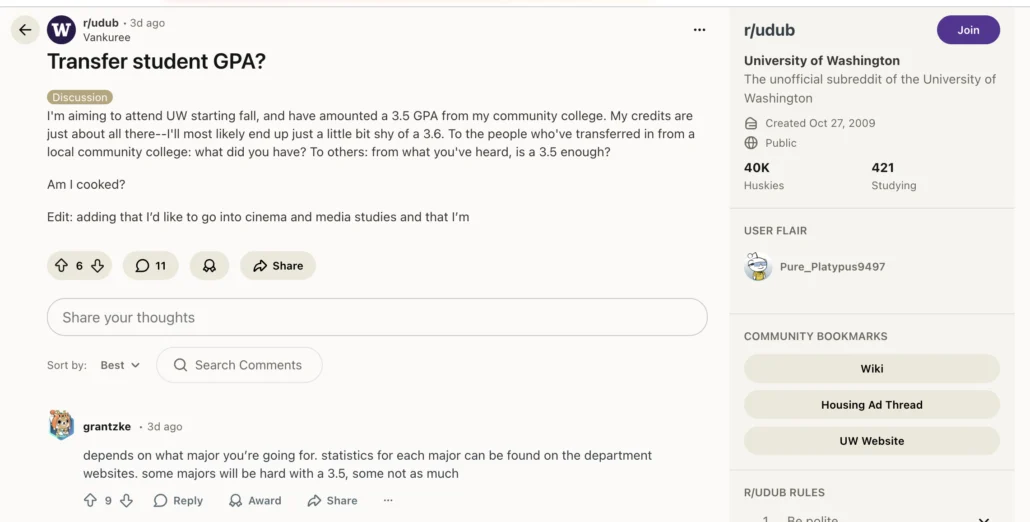
And then there’s Reddit. You can’t control what’s said there, but that’s kind of the point. It’s often where people go for unfiltered opinions. Threads like r/udub are a prime opportunity to engage a prospective student at the bottom of the funnel, when they’re actively looking for reassurance and guidance.
How You Know Your Social Media Brand Is Working
You won’t always see it in metrics right away. But you will start to see:
- People repeat your language back to you
- Followers answer questions for each other
- Someone tags your account as the authority
- Comments defend your institution without staff stepping in
- DMs start with “I follow you because…”
That’s your reputation forming.
With AI-generated content everywhere, people are beginning to pay closer attention to small signals that tell them what’s real. That might be a name attached to a reply, a real face on camera, or an imperfect response from an actual person.
Polished content on social media can feel cold. Unfiltered moments tend to land better, even when they’re not perfect.
That’s what people are looking for right now. Familiarity and a sense that there’s someone real behind the account. Showing up regularly helps. Responding when people comment or tag you helps. Repeating your core brand messages often enough that they start to stick helps, too.
None of this strategy is about chasing trends or tools. It’s about being present in a way people recognize over time.
Building Trust on Social is Only Part of the Work
See how Stamats helps institutions stay discoverable and credible across search and AI-driven platforms.